
The EU’s regulation of critical raw materials
How is the EU shaping the regulation of critical minerals and what are the implications for Australia? What is the role of critical minerals in EU’s clean energy transition?

The EU has introduced a range of internal and external policy instruments with a view to ensure its access to critical raw materials (CRMs). The EU’s terminology centres on “materials” as commodities used in manufacturing, while Australia uses the term “minerals”, which refers to chemical substances that are formed naturally in the ground. Accordingly, the EU’s strategy focuses on the downstream end of the supply chain or advanced manufacturing, while the Australian strategy emphasises upstream resource extraction of critical minerals. Nevertheless, both minerals and materials concern the same elements, and face similar supply and demand challenges given the dominance of China in both upstream and downstream processing.
The EU’s focus is placed on critical minerals and raw materials that are both important for the EU economy and whose supply is subject to a high level of supply risk, based on the concentration of primary supply from producing countries, considering their governance performance and trade aspects. These materials are classified under the Critical Raw Materials Act (CRMA), which entered into force as EU regulation on 23 May 2024. The list of EU’s CRMs is reviewed regularly.
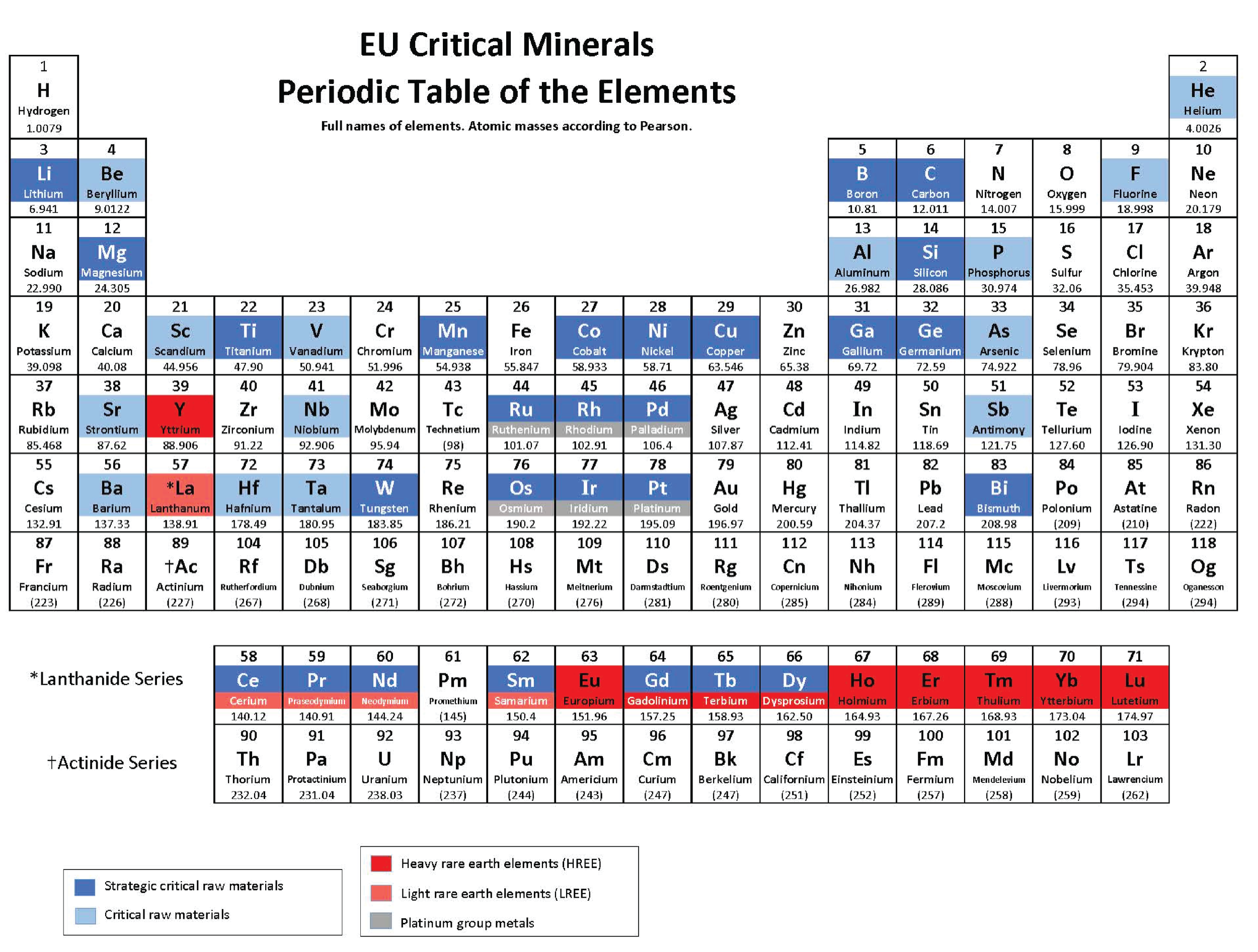
The aim of the CRMA is to increase extraction of critical minerals, their processing and recycling, with a view to reduce EU’s dependence on any individual country for any of its strategic raw materials. The Act sets different benchmarks for EU domestic capacities by 2030 along the strategic raw materials value chain and for the diversification of EU supplies. The Act also seeks to reduce the administrative burden and procedures for critical raw materials projects in the EU. An important aspect of the CRMA is emphasis on sustainability and circularity of CRMs in the EU market, and thus traceability of different critical minerals.
The CRMA is complemented by other EU legislation aimed at increasing supply chain transparency, traceability, and due diligence requirements for products sold in the EU. For example, EU Battery Regulation introduces due diligence requirements which, while apply to economic operators placing batteries on the EU market, cover the entire battery value chain. This will require providing information on responsible sourcing of traded raw materials, suppliers, countries of origin and market transactions starting at raw material extraction. Further, it mandates the Digital Product Passport (DPP) for certain batteries from 2027. The EU Ecodesign for Sustainable Products Regulation (ESPR) extends the DPP to almost all products placed on the internal market (with the exception of food and medical products). The EU’s Corporate Sustainability Due Diligence Directive also introduces a number of due diligence obligations concerning human rights and the environment for large companies, with respect to their operations but also operations of their business partners in companies’ chains of activities.
This research theme focuses on EU’s critical minerals strategy and its implications for Australia. Of particular interest is the consideration of the impact of different EU legislative acts on the Australian mining industry and companies that trade with the EU. A core element of this research theme is an empirical study based on the engagement with Australian stakeholders.